
Harmonizing Your Floors with the Unique Architecture of Your Home
Every architectural style carries a distinct personality, shaped by its unique history, regional materials, and overall sense of scale. When you walk into a room, the floor acts as the visual and physical foundation that links your walls, cabinetry, furniture, and light fixtures into one unified environment. Choosing a surface material that aligns with your home’s original design framework creates a balanced atmosphere where every subsequent decor choice feels deliberate and grounded. By taking time to evaluate grain patterns, plank widths, surface textures, and undertones, you can select a high-performing floor that honors the structural strengths of your specific architecture while supporting the needs of your daily routine.
Traditional and Craftsman Character
Traditional architectural styles, including Colonial, Cape Cod, Georgian, and Craftsman designs, rely heavily on organic materials, substantial trim work, and rich wood elements. These homes carry a sense of heritage, where structural woodwork takes center stage. To complement these features, your flooring choices should reflect durability, classic craft techniques, and a timeless visual weight.
Red oak and white oak remain foundational choices for traditional floor plans. The natural, distinct graining of oak pairs cleanly with detailed crown molding, wainscoting, raised-panel cabinetry, and built-in bookshelves. Installing medium-width planks finished in warm amber, soft honey, or medium walnut tones keeps the space grounded without overwhelming smaller rooms. The gentle variation in oak grain adds depth underfoot, allowing room rugs and upholstered furniture to sit naturally within the space.
In Craftsman homes, where structural woodwork and exposed joinery define the layout, wide-plank hickory offers an exceptional match. Hickory is known for its high density, prominent grain contrast, and dramatic natural color shifts. When cut into wider planks, hickory displays knot patterns and rich tonal shifts that echo the handcrafted spirit of exposed ceiling beams, stone hearths, and stained glass accents. Opting for a low-sheen or hand-scraped texture enhances this connection, giving the floor a tactile quality that feels authentic to the home’s original period details.
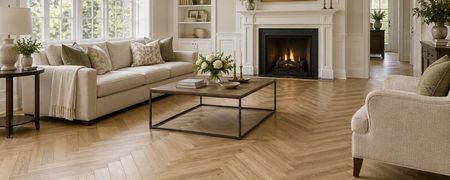
Formal traditional spaces also benefit from geometric wood arrangements, such as classic herringbone or chevron patterns. These structured layouts break up expansive floor areas in formal dining rooms, foyers, and parlors. The repeating angles draw the eye across the room, creating subtle visual motion that frames classic furniture arrangements without requiring heavy decorative additions.
Modern and Contemporary Form
Modern and contemporary architecture prioritizes open floor plans, strong structural geometry, natural light, and clean, unadorned surfaces. In these spaces, the floor often acts as an expansive field that connects distinct functional zones, like kitchen, living, and dining spaces, into a single continuous view. Flooring for modern layouts needs to offer visual consistency, allowing sharp architectural lines, floating structures, and expansive glass windows to remain the main focal points.
Monolithic floor options like polished concrete and large-format porcelain tile fit this architectural language with ease. Large tile slabs reduce the total number of visible grout lines, creating a smoother appearance that makes rooms feel larger and visually uncluttered. Soft grey, warm cream, and charcoal tiles provide a neutral backdrop that reflects ambient light from large windows. Polished concrete, with its industrial origins and subtle color variation, delivers a durable, highly reflective surface that works exceptionally well with exposed steel, floor-to-ceiling glass, and minimalist cabinetry.
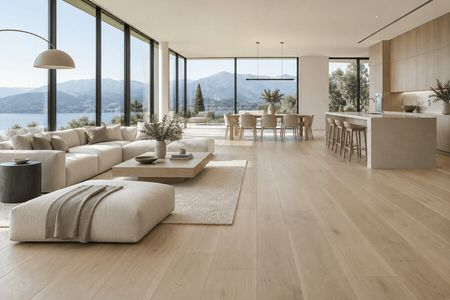
When wood is preferred in a contemporary setting, European white oak cut into extra-wide, long planks brings natural warmth while maintaining a refined profile. European white oak is typically sawn to yield a straight, uniform grain pattern with minimal knotting. Finished with a flat, matte protective coating in natural blonde, raw wood, or soft grey tones, these wide planks keep open layout spaces bright and airy. The lack of heavy grain patterns prevents the floor from feeling busy, making it a reliable foundation for low-profile leather seating, metal fixtures, and floating wall units.
For contemporary spaces designed around bold contrast, dark-stained maple or birch offers a dramatic alternative. Staining these tight-grained hardwoods in deep espresso or rich charcoal creates a sleek, grounded surface. The dark floor creates an eye-catching backdrop that highlights crisp white walls, architectural lighting, and modern artwork, adding depth to high-ceiling spaces without introducing visual clutter.
Farmhouse and Rustic Foundations
Farmhouse, Country, and Rustic architecture centers on comfort, natural materials, and an unpretentious living style. Whether your home features rough-hewn structural beams, board-and-batten siding, or stacked stone fireplaces, the flooring should look and feel as though it has matured naturally alongside the building over time.
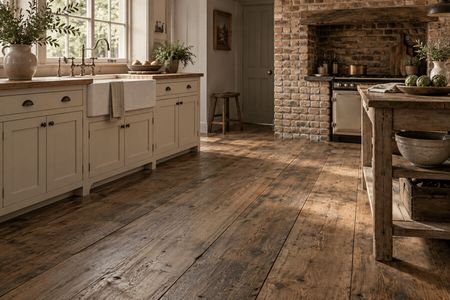
Reclaimed hardwood planks provide an authentic connection to this rustic design heritage. Sourced from historical barns, old industrial mills, and vintage structures, reclaimed heart pine and oak carry distinct character traits that cannot be replicated by new materials. Surface features such as original saw marks, weather distressing, nail holes, and rich reddish-gold undertones bring instant warmth to living areas and kitchens. These floors naturally pair with apron-front sinks, exposed brickwork, and open wood shelving, establishing a relaxed, lived-in feel from day one.
For homeowners who want the textured aesthetic of reclaimed wood alongside a cool, neutral color palette, wire-brushed white oak is a practical choice. The wire-brushing process physically removes the softer top fibers of the wood, exposing the denser, textured grain underneath. This leaves a matte, dimensional surface that mimics the natural wear of aged timber. Beyond its visual appeal, the textured surface is exceptionally practical for busy households, easily concealing daily foot traffic, minor scuffs, and pet claws.
In wet areas, entryways, and utility spaces within a rustic home, natural stone slate offers an ideal balance of performance and style. Slate tiles bring rich organic textures and deep natural tones, ranging from dark charcoal and graphite to muted green and rust. The slightly uneven, cleft surface provides reliable slip resistance underfoot while standing up to water, mud, and heavy boots. Slate transitions smoothly from mudrooms to open kitchen areas, grounding the home with a raw, earth-derived material.
Coastal and Mediterranean Style
Coastal and Mediterranean architecture relies on natural light, breezy movement, matte finishes, and earthy textures to create open, inviting living spaces. These homes are designed to connect interior spaces with the natural environment outside, requiring floors that reflect light, stay cool underfoot, and handle moisture or sand brought in from outdoors.
Coastal home interiors benefit from light-toned, sun-bleached wood floors that recall the soft shades of driftwood, salt-washed decks, and sandy shores. Ash, white oak, and light maple finished in matte lime-washed, white-washed, or pale grey tones help bounce natural sunlight deep into the interior. These light surfaces make living rooms feel larger and more open, pairing seamlessly with light linen upholstery, woven rattan furniture, and airy window treatments. The matte finish helps mask fine dust and sand particles, maintaining a clean look even with frequent indoor-outdoor foot traffic.
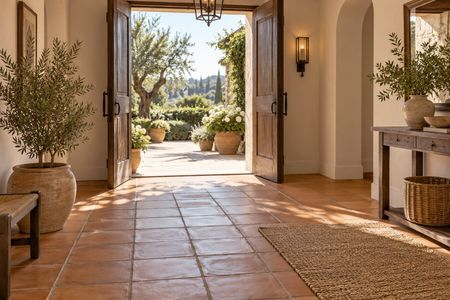
Mediterranean, Spanish Revival, and Tuscan architectures take a different approach, leaning heavily into warm, earth-derived materials that retain cool temperatures during hot seasons. Terracotta tile serves as a defining characteristic of this style. With its warm clay, terracotta, and rich ochre hues, hand-molded clay tile introduces an artisanal quality to hallways, kitchens, and courtyard entrances. The slightly irregular edges and natural shade variations from tile to tile add visual texture, creating a smooth, cohesive transition between indoor living areas and outdoor stone patios.
Natural stone options like limestone and tumbled travertine also fit coastal and Mediterranean interiors exceptionally well. Light beige and cream limestone tiles reflect sunlight without creating harsh glare, offering a soft, chalky texture underfoot that feels comfortable in warm climates. When extended across an entire floor plan, light natural stone tiles unify disparate rooms, reinforcing an open, relaxed atmosphere throughout the entire residence.
Selecting the ideal floor involves balancing structural character with your personal daily routines. At Kelly's Carpet & Furniture, we’ll help you explore your options and find the right flooring for your home in Council Bluffs, IA.